Dog Enrichment
How to Slow Down a Dog That Eats Too Fast: 9 Easy Ways That Work

Quick answer: To slow down a dog that eats too fast, make them work for each bite: serve dry kibble in a snuffle mat, slow feeder bowl, muffin tin or food puzzle, split the daily ration into 2 to 3 smaller meals, and feed pets separately so nobody feels they have to race. If your dog suddenly starts eating much faster than before, or vomits often after meals, check with your vet first.
Some dogs treat every meal like a race: the bowl is empty before you've even put the bag away. It looks funny, but eating too fast can lead to choking, vomiting and, in some large dogs, a dangerous condition called bloat. The good news: learning how to slow down a dog that eats too fast is easy and cheap. This guide explains why dogs gulp their food, which signs to watch, and 9 practical fixes, compared side by side.
Key takeaways
- Fast eating usually comes from competition, past food insecurity, boredom or strong food motivation, but a sudden change can be medical.
- The main risks are choking, vomiting, overeating and bloat (GDV) in deep-chested dogs.
- The best fixes make your dog search or work for food: snuffle mats, slow feeders, muffin tins, puzzles.
- Smaller, more frequent meals and separate feeding spots help every dog.
- Bloat is an emergency: a swollen belly with unproductive retching means go to the vet now.
In this guide
Why does my dog eat so fast?
Most fast eaters aren't greedy. They're following instinct or habit. The most common reasons are:
- Competition. Dogs who had to compete with littermates, or who live with other pets, may eat quickly so nobody takes their food. Hill's notes this can happen even in single-dog homes (Hill's Pet Nutrition).
- Past food insecurity. Rescues, former strays and shelter dogs may eat as if the next meal isn't guaranteed. Many slow down over time with a predictable routine.
- Boredom. A bowl offers zero challenge, so the meal is over in seconds. Dogs are natural foragers, built to sniff and search.
- Strong food motivation. Some breeds and individual dogs are simply very food driven.
- Medical causes. A sudden increase in appetite can be linked to parasites, hormonal or thyroid problems, diabetes or Cushing's disease (Tufts Your Dog, Hill's). If the change is new, talk to your vet before anything else.
Is it bad for a dog to eat too fast?
It can be. The American Kennel Club lists several risks of eating too quickly (AKC):
- Choking on kibble swallowed without chewing.
- Vomiting and discomfort, often bringing up whole, undigested kibble right after the meal.
- Overeating and weight gain. Fast eaters may not feel full until after they've finished, so they keep begging.
- Bloat (GDV). Gastric dilatation-volvulus happens when the stomach fills with gas and can twist. It's life-threatening and needs emergency surgery. Gulping air while eating may contribute. Tufts veterinary nutritionist Dr. Deborah Linder explains that "deep-chested dogs who eat too fast can be at risk for GDV" (Tufts Your Dog).
Emergency signs of bloat: a swollen or hard belly, retching or trying to vomit with nothing coming up, drooling, restlessness, lying down and getting up repeatedly. If you see these, go to an emergency vet immediately. Don't wait to see if it passes.
Signs your dog eats too fast
- The bowl is empty in well under a minute.
- Your dog swallows kibble whole, without chewing.
- They cough, gag or hiccup during or right after meals.
- They often vomit undigested food shortly after eating.
- They gulp loudly or seem to swallow a lot of air.
- They guard the bowl or watch other pets while eating.
If you recognize two or more of these, it's worth changing how you serve meals.
9 ways to slow down a dog that eats too fast
The principle behind every method below is the same: break the meal into small pieces your dog has to find or work for. Here's how to slow down a dog that eats too fast, starting with the most effective options.
1. Serve meals in a snuffle mat
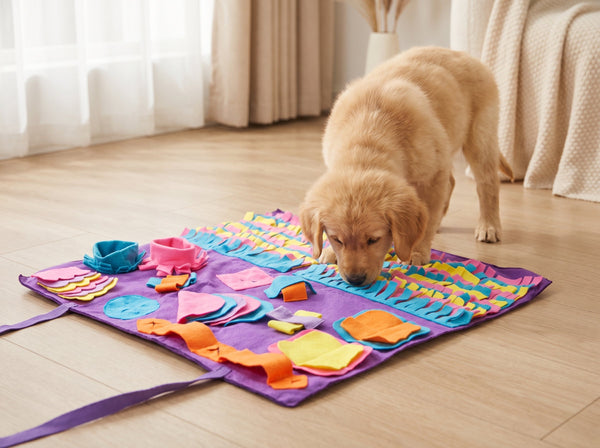
A snuffle mat is a fabric mat with fleece strips, flaps and pockets. You scatter dry kibble into it and your dog has to sniff out every piece, so a meal that took seconds from a bowl now takes several minutes. It also adds mental enrichment, which a bowl never does. Start with food on the surface, then hide it deeper as your dog learns. Our step-by-step guide explains exactly how to use a snuffle mat for the first two weeks.

2. Switch to a slow feeder bowl
Slow feeder bowls have ridges, mazes or knobs that force your dog to eat around obstacles. They're easy, work with dry or wet food, and need no setup. The downside: once a dog learns the pattern, the challenge drops. DIY version: place a small upside-down bowl inside a bigger one and pour the food around it (AKC).
3. Use a muffin tin or a baking sheet
Divide the meal into the cups of a muffin tin, or spread kibble in a single layer on a baking sheet. Your dog has to take small bites and lick up pieces one by one. It's a free fix you can try tonight.
4. Try scatter feeding
Scatter the kibble on a clean floor, a large towel or a patch of clean grass. Searching for each piece slows eating and lets your dog forage naturally. Use this only for dry food and in a spot free of other pets.
5. Use food puzzles and stuffable toys
Treat-dispensing balls, puzzle boards and stuffable toys release food a little at a time. They're great for problem-solving dogs, but some can frustrate beginners, so start with easy levels.
6. Split the daily ration into smaller meals
Instead of one big meal, feed two or three smaller ones. The AKC notes that several smaller meals a day, rather than one large one, has been shown to reduce bloat risk (AKC). Keep the total daily amount the same; ask your vet if you're unsure how much to feed.
7. Feed pets separately
If your dog races because of competition, give each pet its own quiet spot, ideally in different rooms or crates, and pick up bowls when meals are over. Many dogs relax and slow down once they feel nobody will steal their food.
8. Hand-feed part of the meal during training
Use some of the daily kibble as rewards during a 5-minute training session. Your dog eats one piece at a time and learns new skills at the same time.
9. Keep mealtime calm
Feed at regular times, in a quiet place, and avoid serving food when your dog is over-excited or panting right after intense play. Many vets also recommend avoiding vigorous exercise right before and after meals for large, deep-chested breeds.
Comparison: which method should you choose?
| Method | Slows eating | Mental enrichment | Cost | Best for |
|---|---|---|---|---|
| Snuffle mat | High | High (sniffing and searching) | $$ | Fast eaters who are also bored or high-energy |
| Slow feeder bowl | Medium to high | Low to medium | $ | Daily meals with zero setup, wet or dry food |
| Muffin tin / baking sheet | Medium | Low | Free | Trying a fix today |
| Scatter feeding | Medium to high | Medium | Free | Single-pet homes with a clean space |
| Food puzzles | High | High | $$ | Smart dogs who like a challenge |
| Smaller meals | Indirect | None | Free | Every dog, especially large breeds |
| Separate feeding | Indirect | None | Free | Multi-pet homes |
For most dogs, the best results come from combining one "work for it" tool (snuffle mat, slow feeder or puzzle) with smaller meals and a calm, separate feeding spot.
Snuffle mat vs. slow feeder bowl: which is better?
Both slow your dog down, but they do it differently. A slow feeder bowl adds obstacles to a normal meal: simple, durable, compatible with wet food, but most dogs "solve" it quickly. A snuffle mat turns the meal into a nose-work game: your dog sniffs and searches for every piece, so it slows eating and tires the brain. The trade-offs: it works with dry food only, needs supervision, and has to be washed regularly.
Our take: if your dog just needs to eat a little slower, a slow feeder bowl is enough. If your dog also gets bored, destructive or restless indoors, a snuffle mat solves both problems at once. Many owners keep both and alternate.
When to see a vet
- Immediately if you notice any sign of bloat (swollen belly, unproductive retching, restlessness, drooling).
- If your dog suddenly starts eating much faster or seems hungry all the time.
- If your dog vomits regularly after meals, loses weight, or has diarrhea.
- If you're not sure how much your dog should eat per day.
Want a slow feeder that's also a brain game?
The Snoutwell large snuffle mat is about 35.5 inches (90 cm) wide, with fleece strips, flaps and pockets for several difficulty levels, roomy enough for medium and large dogs. Machine washable, rolls up for storage, free tracked shipping and a 30-day money-back guarantee.
FAQ: dogs that eat too fast
How fast is too fast for a dog to eat?
There's no official number, but if your dog empties the bowl in well under a minute, swallows kibble whole, or often gags or vomits after meals, they're eating too fast and will benefit from a slower feeding method.
Can eating too fast make a dog vomit?
Yes. Dogs that gulp their food often bring it back up shortly after eating, usually as whole, undigested kibble. Slowing the meal down usually helps. If vomiting is frequent or your dog seems unwell, see your vet.
Do slow feeders prevent bloat?
Slow feeders, snuffle mats and puzzles reduce how fast a dog eats, and fast eating is considered a risk factor for bloat in deep-chested dogs. But no tool can guarantee bloat won't happen. Smaller meals, calm mealtimes and knowing the emergency signs matter too. Ask your vet about your dog's individual risk.
Is a snuffle mat a good slow feeder?
Yes, for dry food. Your dog has to find each piece of kibble with their nose, which slows the meal and adds mental exercise. Always supervise, and use a slow feeder bowl or lick mat for wet food.
Will my puppy grow out of eating fast?
Some puppies calm down as they mature and feel secure, especially with a regular routine and their own feeding spot. Others stay fast eaters for life, so it's worth building good habits early with slow feeding tools.
How do I slow down eating with two dogs?
Feed them in separate rooms or crates, give each dog their own slow feeding tool, and remove bowls or mats as soon as they're done. Removing the competition is often the biggest change of all.
Sources: American Kennel Club, "Slow Your Dog's Eating" · Hill's Pet Nutrition, "Why Does My Dog Eat So Fast?" · Tufts Your Dog, "Eating Too Fast Can Have Serious Health Consequences". This guide is for general information and doesn't replace advice from your veterinarian.